Watching Weather Change from the Same Shore
A simple practice of revisiting one shoreline and learning to notice how weather reshapes a familiar view.
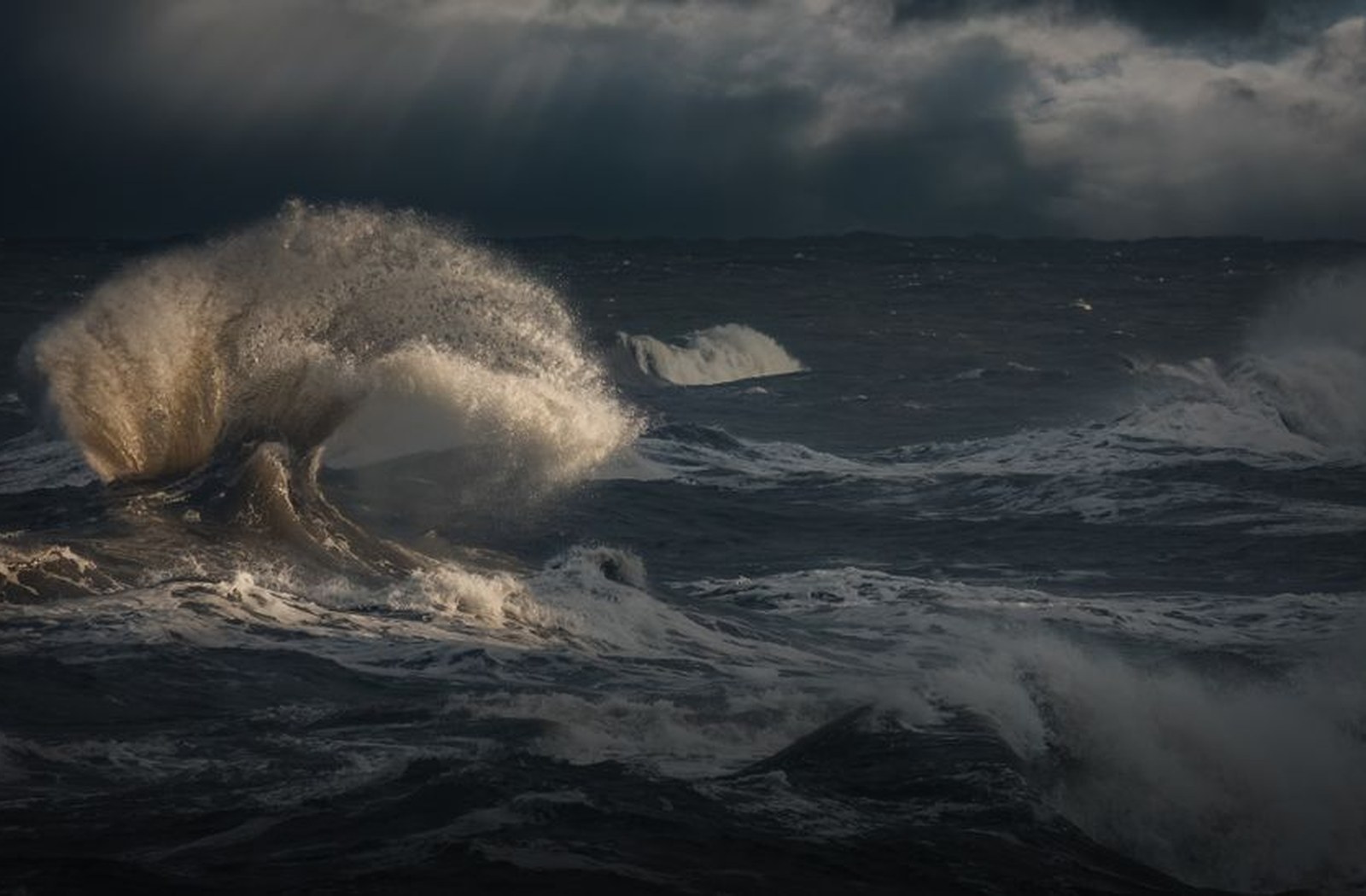
A familiar shore is a useful place to learn how quickly a landscape can change without going anywhere. The rocks stay where they are. The horizon keeps the same line. Yet a shift in wind, cloud or tide can make the whole place feel newly arranged. Returning to one viewpoint over several weeks turns weather from background information into something you can actually read.
Choose a place you can revisit
The best spot is not necessarily the most dramatic. It is somewhere easy enough to reach that you can return without making a project of it: a short stretch of coast, a lake edge, a harbor wall or even a riverside path. Stand in roughly the same place each time. Repetition gives you a fixed frame, and the differences begin to show themselves more clearly.
Notice the practical signs first. Which direction does the grass lean? Is the water broken into small hard ripples or broad rolling shapes? Are distant hills sharply defined or dissolved into haze? A gray day is not one kind of weather; there are dozens of grays, each with its own depth and temperature.
The familiar view becomes interesting when you stop asking it to surprise you and start noticing what has changed.
Watch the light before the scenery
Weather is often easiest to understand through light. A thin cloud layer can flatten everything into soft, nearly shadowless color. A clearing after rain can make wet stone look polished. Low sun can pick out spray that was invisible an hour earlier. Try looking at the same object — a post, a cliff face, a moored boat — and ask what the light is doing to it.
You do not need a camera, but a quick photograph from the same position can be a useful record. Avoid treating it as a competition for the best image. A plain sequence is more valuable: calm, rain, bright wind, mist, late sun. Over time it becomes a small visual calendar.
Let the return become the point
After a few visits, the place starts to carry memory. You remember where the water reached during the last high tide, which clouds brought rain, and how different the same path felt under a warm wind. That accumulation is what makes a repeated walk satisfying. The landscape has not become smaller because you know it; it has become more detailed.
A notebook entry can be as brief as three lines: wind, light, one thing that changed. The habit takes ten minutes, but after a month you have something richer than a weather report — a record of attention tied to a real place.